The Mortgage Stress Test, Explained
Before a lender approves you, it checks that you could still afford the payment if rates rose. You must qualify at the higher of your contract rate plus 2 percentage points, or 5.25%. You never pay that rate; it only decides how much you can borrow.
How it affects your budget
At today's rates, almost everyone qualifies at their rate plus 2%. A buyer offered 4.2% is tested at 6.2%. That usually cuts the maximum mortgage by 15% to 20% compared with qualifying at the real rate.
Who has to pass it
- All new purchase mortgages at federally regulated lenders, insured or not
- Refinances
- Generally not straight renewals, including switching lenders at renewal without borrowing more
How to pass it
- Pay down debt with high monthly payments, like car loans and lines of credit. Every $100 a month of debt lowers what you can borrow.
- Add a co-borrower's income, if it fits your situation.
- Choose a 30-year amortization if you're a first-time buyer. Lower payments help you qualify, though you'll pay more interest overall.
- Put more down, or look at a lower price.
Want the whole plan, with your own numbers?
The toolkit's Comfortable Budget Calculator and What-If Stress Planner test your budget against higher rates, job loss and repairs, so you know your safe number, not just your approval.
Common questions
What is the stress test rate in 2026?
The higher of your contract rate plus 2% or 5.25%. OSFI reviews the floor regularly and has kept it unchanged.
Does the stress test apply to insured mortgages?
Yes. Insured mortgages (less than 20% down) use the same test, set by the Department of Finance.
Do credit unions use the stress test?
Provincially regulated credit unions aren't bound by OSFI's rule, but most apply a similar test, and insured mortgages always require it.
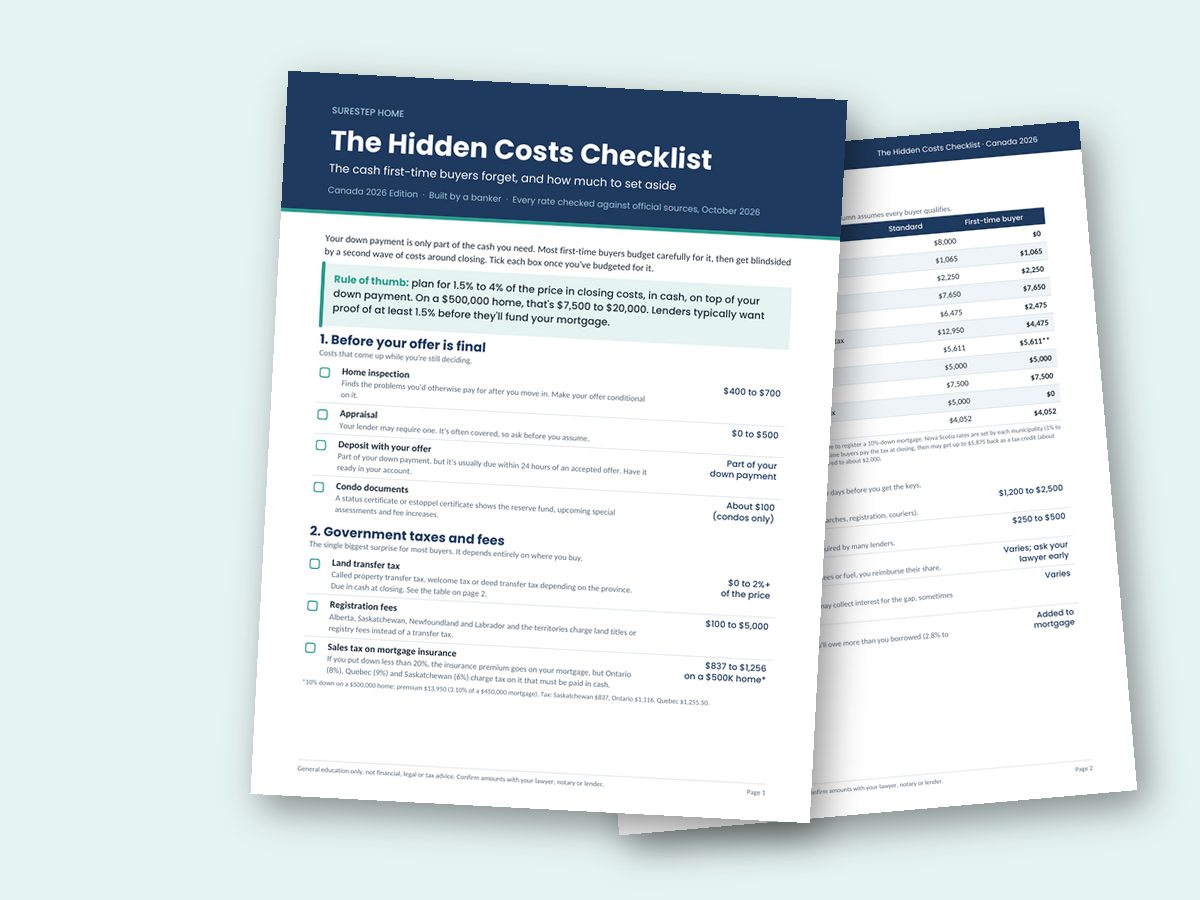
Free: the Hidden Costs Checklist
The 22 costs first-time buyers forget, with a typical price for each, plus the land transfer tax for every province on a $500,000 home.
Send me the free checklistMore free guides
- First-Time Home Buyer Checklist for Canada
- Closing Costs in Canada: How Much Cash You Need
- Land Transfer Tax in Canada, Province by Province
- Minimum Down Payment in Canada
- How Much Does CMHC Mortgage Insurance Cost?
General education only, not financial, legal, tax or mortgage advice. Rules change; confirm amounts with your lender, lawyer or notary before you rely on them.